Signs Your Business Has Outgrown DIY Bookkeeping
In the early days of running a business, DIY bookkeeping feels practical, even empowering. You track expenses, send invoices, reconcile accounts, and keep things moving.
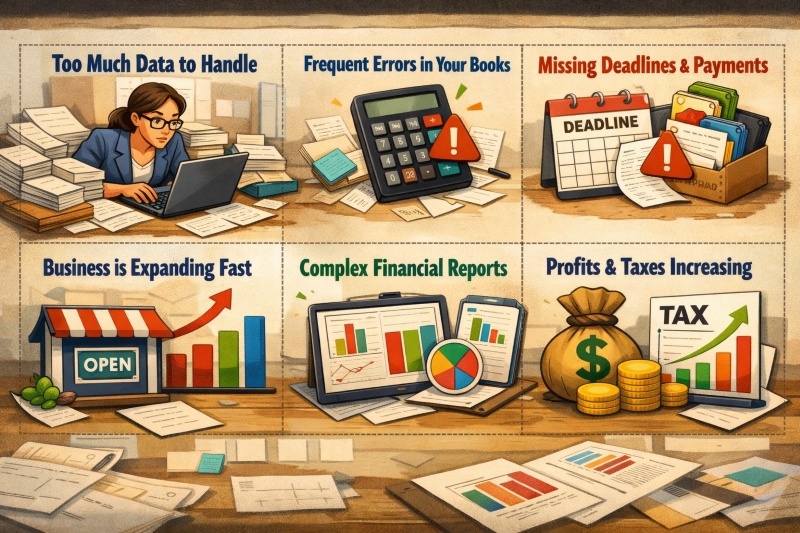
But as your business grows, the financial side becomes more complex, and what once felt manageable can quickly turn into a source of stress, errors, and missed opportunities. If you have been wondering whether it is time to hand off your books to a professional, here are the clearest signs your business has outgrown the DIY stage.
1. Bookkeeping Is Taking Time Away From Revenue‑Generating Work
When you started, spending a few hours a week on bookkeeping may have been fine. But as your client base expands, those hours become more expensive. Every minute spent categorizing transactions or troubleshooting accounting software is a minute not spent growing your business. If bookkeeping consistently falls to late nights or weekends, it is a strong indicator that your time is better invested elsewhere and that a professional bookkeeper can give you peace of mind.
2. Your Financials Are Always Behind
If your books are never quite up to date, you are not alone. Many business owners fall into a cycle of “catch‑up bookkeeping,” where months go by before financials are reviewed. The problem is that outdated books lead to outdated decisions. You cannot confidently manage cash flow, plan for taxes, or evaluate performance without timely financial data. When staying current becomes a struggle, it is a sign your bookkeeping needs have surpassed what DIY can realistically support.
3. You are Unsure Whether Your Numbers Are Accurate
DIY bookkeeping often leads to uncertainty, especially when transactions get complicated. Are you categorizing expenses correctly? Are you recording revenue the right way? Are you missing deductions? Small mistakes can snowball into larger issues, from inaccurate financial statements to costly tax errors. If you find yourself second‑guessing your books or Googling accounting questions more often than you would like to admit, it is time to bring in expertise.
4. Your Business Has More Moving Parts Than It Used To
Growth brings complexity. Maybe you’ve added employees or contractors. Maybe you’re managing inventory, multiple revenue streams, or new software systems. Maybe you’ve expanded into online sales or subscription services. Each new layer adds accounting requirements that DIY systems aren’t built to handle well. A professional bookkeeper ensures your financial processes scale with your business and not against it.
5. Tax Season Has Become a Source of Anxiety
If tax time feels overwhelming, it is usually because the books are not clean, organized, or complete. Scrambling to fix errors in March or April is stressful and often expensive. A professional bookkeeper keeps your financials tax‑ready year‑round, ensuring your accountant has everything they need to file accurately and efficiently.
6. You Want Better Insight, Not Just Data
DIY bookkeeping gives you numbers. Professional bookkeeping gives you clarity. When your business reaches a stage where you need real financial insight, it is a sign you have moved beyond basic bookkeeping needs. A professional helps you understand what your numbers mean and how to use them to make smarter decisions.